Can AI really run my business operations? What it can (and can't) do in 2026
Wondering if AI can run your business in 2026? Learn what AI tools can and cannot do, and why human judgment still matters most.

If you spend any time online, you have probably seen big claims like "AI can run your whole business while you sleep." It sounds exciting, especially if your days are full of emails, invoices, and endless to-do lists. But before you hand over the keys to your business, let's take a simple, honest look at what AI for business operations can really do in 2026, and what it still cannot.
Here is the short version: AI is a brilliant helper. It is not yet a business owner.
The short answer
AI is very good at doing the repetitive, boring, time-eating tasks that fill up your day. Think scheduling, replying to common questions, sorting emails, writing reports, and even drafting marketing posts. Thanks to AI business automation, a lot of this can now happen with barely any effort from you.
What AI still cannot do is make judgment calls that need real-world understanding, build true relationships with your customers, or take responsibility when something goes wrong. It can help you work faster. It cannot replace you.
What AI can actually do well in 2026
1. Handle boring admin work
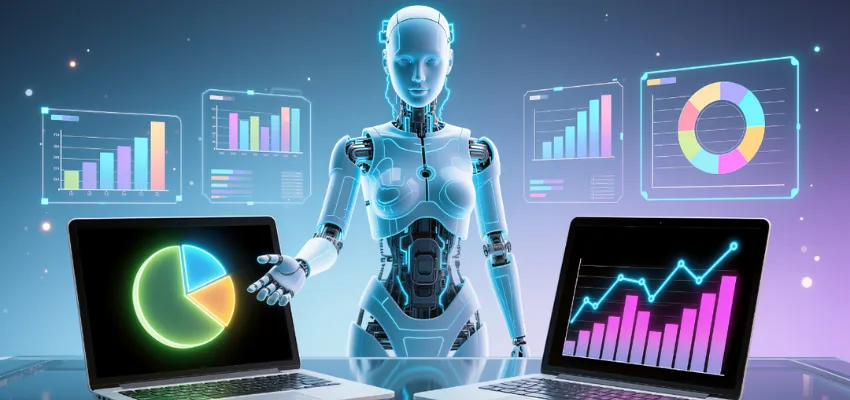
This is where AI truly shines. Business process automation simply means using software to do routine tasks on its own, without a person doing them by hand every time. In 2026, AI tools can easily:
- Sort and reply to common customer emails
- Book meetings without the back-and-forth messages
- Create invoices and send payment reminders
- Update spreadsheets and basic records
- Write first drafts of reports
If your business has a lot of small, repeated tasks, this kind of workflow automation can save you many hours every single week.
2. Customer support (for simple questions)
AI chatbots have gotten much smarter. Using what is called conversational AI, which just means software built to talk with people naturally, these tools can answer common questions, help track orders, and solve small problems any time of day, without making a customer wait.
But there is a catch. When a customer has an unusual complaint or is upset about something, AI often falls short. It follows a script. It does not truly feel or understand frustration the way a person can.
3. Data analysis and reports
AI is excellent at finding patterns hidden in numbers. It can study your sales data and tell you which product is selling fast, which month is usually slow, or which customers might stop buying from you soon. This is called predictive analytics, which simply means using past information to make a smart guess about the future.
This can help you make faster, smarter decisions. Just remember, it gives you a prediction, not a promise.
4. Content and marketing help
Need a product description, a social media caption, or a first draft for a newsletter? AI can write these in seconds. It will not fully replace a skilled writer who understands your brand's personality, but it gives you a strong starting point and saves a lot of time. This is a big part of AI-powered marketing tools used by small businesses today.
5. Inventory and supply tracking
Many small businesses now use AI inventory management tools that warn them before stock runs out, or before they order too much of something that is not selling well. This kind of smart tracking removes a lot of the guesswork that used to take hours of manual checking.
What AI still cannot do (at least not yet)
1. Make judgment calls in grey areas
AI works best when there are clear, fixed rules. It struggles when a situation needs common sense, kindness, or an understanding of context. If a loyal customer asks for a special exception to a rule, AI does not know when bending that rule is good for business and when it is a bad idea. You do.
2. Build real relationships
Trust is still something only people can build. Customers remember when a business owner personally checked on them, or when a supplier gave them extra support during a hard time. AI can store notes about these moments, but it cannot create the warmth of a real relationship.
3. Take full responsibility
When something goes wrong, whether it is a legal problem, a safety issue, or an angry customer, someone has to step up and make a decision. AI cannot be held responsible. It does not carry the weight of consequences the way a business owner does. That job still belongs to you.
4. Understand your business's culture
Every business has its own personality and unwritten rules. AI does not naturally know why your team works a certain way, or why one client relationship needs extra patience. It can follow instructions, but it does not truly understand your culture the way someone who lives it every day does.
5. Handle totally unexpected situations
AI learns from patterns in old data. When something brand new happens, like a sudden shortage or a surprising shift in what customers want, AI can struggle to keep up. It works from what it has already seen. It cannot think on its feet the way an experienced human can.
AI: what it can do vs what it cannot do
| Task | Can AI handle it? |
|---|---|
| Sorting emails and scheduling | Yes, very well |
| Answering simple customer questions | Yes, mostly |
| Spotting sales trends and patterns | Yes, quite well |
| Writing first drafts of content | Yes, as a starting point |
| Handling angry or emotional customers | No, needs a human touch |
| Making final business decisions | No, still your job |
| Building long-term trust with clients | No, this takes a real person |
| Taking responsibility for mistakes | No, AI cannot be held accountable |
So, should you use AI in your business?
Yes, definitely, just not as a replacement for yourself. Think of AI as a super fast junior helper. It works quickly, never gets tired, and rarely complains. But it still needs someone to guide it, give clear instructions, and catch its mistakes.
The smartest way for most small and medium businesses to use AI tools for small business right now is a mixed approach. Let AI handle the repeated, data-heavy, boring tasks. Keep the big decisions, relationships, and judgment calls in human hands.
Some people call this augmented intelligence rather than artificial intelligence. It simply means AI supports your thinking instead of replacing it. That small difference matters a lot.
A few simple tips before you start
- Start small. Pick one repeated task, like sorting emails or booking appointments, and automate that first.
- Always keep a human check. Even good AI tools make mistakes, so review important work before it reaches customers.
- Protect your data. Make sure any tool you use follows good data privacy habits, and ask questions if you are unsure how your information is stored.
- Set clear limits. Decide beforehand what AI can do on its own, and what needs your approval first.
- Keep learning. AI tools change fast, so what works today may look different next year. Stay curious.
The bottom line
In 2026, AI is a powerful helper, not a full business partner. It saves time, reduces boring work, and gives useful insights from data. But it cannot replace your judgment, your relationships, or your sense of responsibility. Businesses that win with AI are not the ones who hand over full control. They are the ones who use it wisely while still holding the steering wheel themselves.
Sustaining business growth requires moving away from scattered tools, messy spreadsheets, and informal tracking. Platforms like Neome leverage automated streamlining to handle complex business operations in a single, cohesive workspace. It replaces fragmented data with a unified source of truth, helping scaling companies automate routine processes, eliminate communication gaps, and maintain organisational velocity as the team expands.
Frequently asked questions
- Can AI completely run a small business without any human help? No, AI can automate tasks, but final decisions and responsibility still need a real person.
- Is it safe to let AI handle customer data? Yes, as long as you choose tools with strong data privacy and security practices.
- Which business tasks are best for AI to handle? Repeated and data-heavy tasks like scheduling, emails, invoicing, and reports work best.
- Will AI take away jobs in small businesses? AI mostly changes how work is done, freeing people up for tasks that need a human touch.
- How do I know if my business is ready to use AI? If you are spending hours each week on repeated tasks, that is a good sign to start small with AI.
Keep reading
More from the Neome blog.

How to run WhatsApp CRM without losing the next step
Deals do not die because WhatsApp is the wrong channel. They die when nobody owns the lead, stages are unclear, and the next step has no date. Here is how operators keep conversation and pipeline together.
Read article →
Real-time business visibility: tools that show you what's happening right now (2026)
See how real-time business visibility tools help you track sales, stock, and deliveries live in 2026, so you can catch problems fast and act sooner.
Read article →Curious how this works in practice?
Watch real teams of every size run on Neome, from solo operators to large enterprises.